
Complete Guide to Pesach at the Temple מדריך מלא לפסח בבית המקדש
Pesach is the first of the three pilgrimage festivals. Every man in Israel is obligated to appear at the Temple, bring the Korban Pesach with his chabura, and celebrate the seven-day festival in Jerusalem. This guide covers everything you need to prepare. פסח הוא הראשון משלושת הרגלים. כל גבר בישראל מחויב להיראות בבית המקדש, להקריב את קרבן הפסח עם חבורתו, ולחגוג את שבעת ימי החג בירושלים. מדריך זה מכסה את כל מה שצריך כדי להתכונן.
Pesach B'Tumah — This Year's Special Circumstance פסח הבא בטומאה — המצב המיוחד השנה
Since the Beis HaMikdash was rebuilt so close to Pesach, there has not been enough time to prepare a Parah Adumah (red heifer) and carry out the purification process. As a result, the majority of the Jewish people remain in a state of tumat met (corpse impurity). According to halachah, when the majority of the congregation is tamei met, the Korban Pesach is brought in a state of tumah — tumah dechuya b'tzibbur (impurity is overridden for communal obligations). This is a fully valid offering with the same obligation and the same kedushah. מאחר שבית המקדש נבנה סמוך מאוד לפסח, לא היה מספיק זמן להכין פרה אדומה ולבצע את תהליך הטהרה. כתוצאה מכך, רוב עם ישראל נמצאים עדיין במצב של טומאת מת. על פי ההלכה, כאשר רוב הציבור טמאי מת, קרבן הפסח קרב בטומאה — טומאה דחויה בציבור. זהו קרבן כשר לכל דבר, באותה חובה ובאותה קדושה.
What this means for you: The 7-day Parah Adumah (red heifer) purification process is not required this year for the Korban Pesach — tumat met is overridden. However, other forms of tumah still apply: a zav, zavah, niddah, yoledet, or metzora may not participate and must complete their respective purification. A baal keri must immerse in a mikvah before participating. There are also differences in which offerings can be brought — see details below. מה זה אומר עבורכם: תהליך הטהרה של פרה אדומה בן 7 הימים אינו נדרש השנה לקרבן הפסח — טומאת מת נדחית. אולם, שאר סוגי הטומאה עדיין חלים: זב, זבה, נידה, יולדת ומצורע אינם יכולים להשתתף ועליהם להשלים את טהרתם. בעל קרי חייב לטבול במקווה לפני ההשתתפות. כמו כן, יש הבדלים בקרבנות שניתן להביא — ראו פרטים להלן.
Source: Rambam, Hilchot Korban Pesach 7:1 — "If the majority of the congregation was tamei met... they bring the Pesach in tumah." מקור: רמב״ם, הלכות קרבן פסח ז:א — ״רבים שהיו טמאי מת בפסח ראשון... עושין בטומאה.״
Overview סקירה כללית
The Pesach experience at the Temple has several components: the pilgrimage itself (aliyah laregel), the Korban Pesach sacrifice and Seder meal, the pilgrimage offerings, and the seven-day festival of Matzot. Each has its own requirements and timing. חוויית הפסח בבית המקדש כוללת מספר מרכיבים: העלייה לרגל עצמה, קרבן הפסח וליל הסדר, קרבנות הרגל, ושבעת ימי חג המצות. לכל אחד דרישות ולוח זמנים משלו.
Korban Pesach קרבן פסח
A lamb or young goat, purchased by your group, sacrificed at the Temple on 14 Nisan and eaten together that night at the Seder. This is the central mitzvah of the festival. כבש או גדי, שנרכש על ידי הקבוצה שלכם, מוקרב בבית המקדש בי״ד ניסן ונאכל יחד באותו הלילה בסדר. זו המצווה המרכזית של החג.
Pilgrimage Offerings קרבנות הרגל
Normally, three animals you bring to the Temple during the festival: one fully burned on the altar, one eaten as a festive family meal, and one shared with the poor and the Levites. This year, these offerings cannot be brought since they require ritual purity and there is no Parah Adumah available. בדרך כלל, שלוש בהמות שמביאים למקדש במהלך החג: אחת נשרפת כולה על המזבח, אחת נאכלת כסעודת חג משפחתית, ואחת משותפת עם העניים והלויים. השנה, קרבנות אלו לא ניתן להביא מאחר שהם דורשים טהרה ואין פרה אדומה זמינה.
Seven Days of Matzot שבעת ימי מצות
15–21 Nisan. Eat matzah, remove chametz, celebrate in Jerusalem. ט״ו–כ״א ניסן. אכילת מצה, ביעור חמץ, חגיגה בירושלים.
Key Dates — Nisan 5786 תאריכים חשובים — ניסן תשפ״ו
When to Arrive in Jerusalem מתי להגיע לירושלים
This year, since the Parah Adumah process is not required for the Korban Pesach, the timeline is simpler. Plan your trip around these dates: השנה, מאחר שתהליך הפרה האדומה אינו נדרש לקרבן הפסח, לוח הזמנים פשוט יותר. תכננו את הנסיעה לפי התאריכים הבאים:
For the Korban Pesach לקרבן הפסח
Arrive by 14 Nisan (April 1) in time for the afternoon sacrifice. The Parah Adumah process is not required this year for the pesach. הגיעו עד י״ד ניסן (1 באפריל) בזמן לשחיטת אחר הצהריים. תהליך הפרה האדומה אינו נדרש השנה לפסח.
How Long to Stay כמה זמן להישאר
The festival runs 15–21 Nisan (7 days). You are free to leave after the last Yom Tov (night of 21 Nisan). Most pilgrims stay the full festival. החג נמשך ט״ו–כ״א ניסן (7 ימים). ניתן לצאת לאחר יום טוב האחרון (ליל כ״א ניסן). רוב עולי הרגל נשארים לכל החג.
Total Trip סה״כ נסיעה
Up to 15 days if purifying for pilgrimage offerings (7 Nisan – 21 Nisan). Up to 12 days if arriving for seh selection. 8 days minimum (14–21 Nisan) — sufficient this year for the Korban Pesach since the Parah Adumah process is not required. עד 15 ימים אם מיטהרים לקרבנות הרגל (ז׳–כ״א ניסן). עד 12 ימים אם מגיעים להפרשת השה. 8 ימים לפחות (י״ד–כ״א ניסן) — מספיק השנה לקרבן הפסח מאחר שתהליך הפרה האדומה אינו נדרש.
If you wish to purify for the pilgrimage offerings, you can begin at a regional station near your home and arrive in Jerusalem later — as long as you complete the process and immerse in a mikvah before bringing the offerings. אם ברצונכם להיטהר לקרבנות הרגל, ניתן להתחיל בתחנה אזורית ליד ביתכם ולהגיע לירושלים מאוחר יותר — כל עוד משלימים את התהליך וטובלים במקווה לפני הקרבת הקרבנות.
Budget & What to Prepare תקציב ומה להכין
Here is a breakdown of the costs and items you need. Prices are estimated in US dollars. להלן פירוט העלויות והפריטים הנדרשים. המחירים מוערכים בשקלים (שקל הקודש).
Required Purchases רכישות חובה
Pilgrimage Offerings — Require Purity (Not Brought B'Tumah) קרבנות הרגל — דורשים טהרה (לא קרבים בטומאה)
These offerings are normally required of every pilgrim, but they cannot be brought b'tumah. If you undergo the Parah Adumah purification process during the festival, you can bring them on a later day of Chol HaMoed. קרבנות אלו נדרשים בדרך כלל מכל עולה רגל, אך אינם קרבים בטומאה. אם תעברו את תהליך טהרת הפרה האדומה במהלך החג, תוכלו להביאם ביום מאוחר יותר בחול המועד.
Not Brought This Year לא קרב השנה
Chagigat 14 — Normally, this is an optional extra animal sacrificed on 14 Nisan, eaten at the Seder before the Korban Pesach so everyone fills up first. When the Korban Pesach is brought b'tumah, the chagigat 14 is not brought (Rambam, Hilchot Korban Pesach 10:13). חגיגת י״ד — בדרך כלל, זוהי בהמה נוספת (רשות) שמקריבים בי״ד ניסן, ונאכלת בסדר לפני קרבן הפסח כדי שכולם ישבעו. כאשר קרבן הפסח קרב בטומאה, חגיגת י״ד אינה קרבה (רמב״ם, הלכות קרבן פסח י:יג).
Other Expenses to Plan For הוצאות נוספות לתכנון
- Travel to and from Jerusalem — depends on distance. Pilgrimage routes have free water stations and rest areas. נסיעה לירושלים וחזרה — תלוי במרחק. לאורך מסלולי העלייה לרגל יש תחנות מים ומנוחה חינם.
- Matzah, maror, wine — matzah for the Seder and throughout the festival, bitter herbs, and four cups of wine per person. Standard grocery expenses. מצה, מרור, יין — מצה לסדר ולכל החג, מרור וארבע כוסות יין לכל אדם. הוצאות מכולת רגילות.
- Food for the festival — 7 days of meals in Jerusalem. If you farm or buy produce, you've been setting aside 10% as ma'aser sheni (second tithe) all year — this money is specifically designated to be spent on food and drink in Jerusalem during the festivals. This is what it's for. אוכל לחג — 7 ימי ארוחות בירושלים. אם אתם מגדלים או קונים תוצרת חקלאית, הפרשתם 10% כמעשר שני כל השנה — כסף זה מיועד במיוחד להוצאות אוכל ושתייה בירושלים בימי הרגל. זה בדיוק מה שהוא נועד לכסות.
- Accommodation — Jerusalemites traditionally host pilgrims free of charge. You will not pay for lodging in most cases. לינה — תושבי ירושלים מארחים עולי רגל ללא תשלום כמנהג. ברוב המקרים לא תשלמו על לינה.
The Torah guarantees that no one will covet your land while you are away on pilgrimage (Exodus 34:24). Leave with confidence. התורה מבטיחה שאיש לא יחמוד את ארצכם בעוד אתם בעלייה לרגל (שמות ל״ד:כ״ד). צאו בביטחון.
Your Checklist רשימת המטלות שלכם
Every Individual כל אדם
-
Complete Parah Adumah purification (red heifer process)— Not required this year for the Korban Pesach. The pesach is brought b'tumah. The red heifer process is only needed if you want to bring pilgrimage offerings. Other forms of tumah (zav, niddah, etc.) still require purification.השלמת טהרת פרה אדומה— לא נדרש השנה לקרבן הפסח. הפסח קרב בטומאה. תהליך הפרה האדומה נדרש רק למי שרוצה להביא קרבנות רגל. שאר סוגי הטומאה (זב, נידה וכו׳) עדיין דורשים טהרה. - Register in a chabura — before 14 Nisan הירשמו לחבורה — לפני י״ד ניסן
- Be present at the Temple courtyard on 14 Nisan afternoon for the slaughter היו נוכחים בעזרת המקדש אחר הצהריים של י״ד ניסן לשחיטה
- Eat the Korban Pesach with matzah and maror on Seder night אכלו את קרבן הפסח עם מצה ומרור בליל הסדר
- Remove all chametz from your possession before midday on 14 Nisan בערו כל חמץ מרשותכם לפני חצות י״ד ניסן
- Buy and bring an animal for your Shalmei Simchah (rejoicing offering) — you'll sacrifice it at the Temple and eat the meat as a celebratory meal with family and guests קנו והביאו בהמה לשלמי שמחה — תקריבו אותה במקדש ותאכלו את הבשר כסעודת חגיגה עם משפחה ואורחים
Head of Household / Chabura Organizer ראש משפחה / מארגן חבורה
- Register the chabura — list all members (men, women, children who can eat) רשמו את החבורה — רשימת כל החברים (גברים, נשים, ילדים שיכולים לאכול)
- Order or acquire a seh — lamb or kid goat, male, under one year, blemish-free הזמינו או רכשו שה — כבש או גדי, זכר, בן שנתו, ללא מומים
- Set aside the seh on 10 Nisan and ensure it is guarded and inspected הפרישו את השה בי׳ ניסן וודאו שהוא נשמר ונבדק
-
Ensure all members have completed Parah Adumah purification before 14 Nisan— Not required this year (pesach b'tumah). Ensure members with other forms of tumah (zav, niddah, etc.) have completed their respective purifications.ודאו שכל החברים השלימו טהרת פרה אדומה לפני י״ד ניסן— לא נדרש השנה (פסח בטומאה). ודאו שחברים עם סוגי טומאה אחרים (זב, נידה וכו׳) השלימו את טהרתם. - Arrange a roasting location and Seder venue within Jerusalem סדרו מקום צלייה ומקום לסדר בתוך ירושלים
- Prepare matzah, maror, wine, and food for the household for the full 7-day festival הכינו מצה, מרור, יין ואוכל למשפחה לכל 7 ימי החג
Bedikat Chametz Before Departure: If you were home at any point during the 30 days before Pesach, you are obligated to search your home for chametz before leaving for Jerusalem. You have two options: בדיקת חמץ לפני היציאה: אם הייתם בביתכם בכל שלב במהלך 30 הימים שלפני פסח, אתם מחויבים לבדוק את הבית מחמץ לפני היציאה לירושלים. יש שתי אפשרויות:
- Option A: Search for chametz at home before you leave, or appoint an agent to do the bedikah on the night of the 14th אפשרות א׳: בדקו חמץ בבית לפני היציאה, או מנו שליח שיבדוק בליל י״ד
- Option B: Leave on 14 Nisan morning — after performing bedikat chametz at home the night before (night of the 13th). Burn remaining chametz that morning before departure. אפשרות ב׳: צאו בבוקר י״ד ניסן — לאחר שביצעתם בדיקת חמץ בבית בלילה שלפני (ליל י״ג). שרפו חמץ שנותר באותו בוקר לפני היציאה.
Men Only — Additional Obligations גברים בלבד — חובות נוספות
- Appear at the Temple (re'iyat panim) — the pilgrimage obligation itself היראו בבית המקדש (ראיית פנים) — חובת העלייה לרגל עצמה
- Buy and bring an animal for the Olat Re'iyah — fully burned on the altar as your appearance gift to God קנו והביאו בהמה לעולת ראייה — נשרפת כולה על המזבח כמתנת היראות שלכם לה׳
- Buy and bring an animal for the Shalmei Chagigah — sacrificed at the Temple, and the meat is your festive family meal קנו והביאו בהמה לשלמי חגיגה — מוקרבת במקדש, והבשר הוא סעודת החג המשפחתית שלכם
Step 1 — Purification (Parah Adumah Not Required This Year) שלב 1 — טהרה (פרה אדומה לא נדרשת השנה)
This year: Since the Temple was rebuilt too close to Pesach, there has not been time to prepare a Parah Adumah. The majority of the congregation is tamei met, so the Korban Pesach is brought b'tumah. You do not need to purify before bringing or eating the Korban Pesach. Skip to Step 2 — Chabura. השנה: מאחר שבית המקדש נבנה סמוך מאוד לפסח, לא הספיקו להכין פרה אדומה. רוב הציבור טמאי מת, ולכן קרבן הפסח קרב בטומאה. אין צורך להיטהר לפני הקרבה או אכילה של קרבן הפסח. עברו לשלב 2 — חבורה.
In a regular year, ritual purity is required to enter the Temple and to eat the Korban Pesach. The 7-day red heifer purification process involves: בשנה רגילה, טהרה נדרשת לכניסה למקדש ולאכילת קרבן הפסח. תהליך הטהרה של 7 ימים עם אפר פרה אדומה כולל:
- Day 1: Begin purification — sprinkled with the ashes of the red heifer mixed with spring water יום 1: התחלת טהרה — הזאה באפר פרה אדומה מעורב במים חיים
- Day 3: Second sprinkling יום 3: הזאה שנייה
- Day 7: Final sprinkling, followed by immersion in a mikvah. Purity takes effect at sunset. יום 7: הזאה אחרונה, ולאחריה טבילה במקווה. הטהרה חלה בשקיעה.
Although purification is not required for the Korban Pesach this year, it is required for the pilgrimage offerings (olat re'iyah, shalmei chagigah, shalmei simchah). If you wish to bring those offerings, you should still purify. Appointments are available at the Mount of Olives and regional stations. Learn more about the purification process → אף שטהרה אינה נדרשת לקרבן הפסח השנה, היא כן נדרשת לקרבנות הרגל (עולת ראייה, שלמי חגיגה, שלמי שמחה). אם ברצונכם להביא קרבנות אלו, עליכם להיטהר. ניתן לקבוע תורים בהר הזיתים ובתחנות אזוריות. מידע נוסף על תהליך הטהרה ←
Step 2 — Form a Chabura שלב 2 — הקמת חבורה
The Korban Pesach is eaten in groups called chaburot. Every person — man, woman, or child who can eat — must be registered in a chabura before the sacrifice. Registration is permanently locked at the time of slaughter. קרבן הפסח נאכל בקבוצות הנקראות חבורות. כל אדם — גבר, אישה או ילד שיכול לאכול — חייב להיות רשום בחבורה לפני השחיטה. הרישום ננעל לצמיתות בזמן השחיטה.
- A chabura can be a family, a group of friends, or a community חבורה יכולה להיות משפחה, קבוצת חברים, או קהילה
- Every member must be able to eat at least a kezayit (olive-sized portion) of the korban כל חבר חייב להיות מסוגל לאכול לפחות כזית מהקרבן
- One seh (lamb or goat) is designated per chabura — ensure your group size matches שה אחד (כבש או גדי) מיועד לכל חבורה — ודאו שגודל הקבוצה מתאים
- In a regular year, all members must be ritually pure (including Parah Adumah) by the time of slaughter — this year, the Parah Adumah process is not required since the pesach is brought b'tumah. However, members with other forms of tumah (zav, zavah, niddah, yoledet, metzora) still may not participate and must complete their respective purifications. בשנה רגילה, כל החברים חייבים להיות טהורים (כולל פרה אדומה) עד זמן השחיטה — השנה, תהליך הפרה האדומה אינו נדרש מאחר שהפסח קרב בטומאה. עם זאת, חברים עם סוגי טומאה אחרים (זב, זבה, נידה, יולדת, מצורע) עדיין אינם יכולים להשתתף ועליהם להשלים את טהרתם.
Step 3 — The Seh (Lamb or Goat) שלב 3 — השה (כבש או גדי)
Each chabura brings one seh — either a lamb (keves) or a kid goat (ez). The animal must meet the following requirements: כל חבורה מביאה שה אחד — כבש או גדי עזים. הבהמה חייבת לעמוד בדרישות הבאות:
- Male, under one year old זכר, בן שנתו
- Free of blemishes — inspected from 10 Nisan onward ללא מומים — נבדק מי׳ ניסן ואילך
- Set aside on 10 Nisan and guarded until slaughter מופרש בי׳ ניסן ונשמר עד השחיטה
You may order a pre-inspected seh through the Temple ordering system, or bring your own for priestly inspection. ניתן להזמין שה שנבדק מראש דרך מערכת ההזמנות של המקדש, או להביא משלכם לבדיקת הכהנים.
The Sacrifice — 14 Nisan Afternoon השחיטה — אחר הצהריים של י״ד ניסן
The Korban Pesach is slaughtered in the Temple courtyard on the afternoon of 14 Nisan, after the Temple's daily afternoon service. This year, since the pesach is brought b'tumah, you are permitted to enter the Azarah (Temple courtyard) even while tamei met — normally a serious prohibition. Here's what happens: קרבן הפסח נשחט בעזרת המקדש אחר הצהריים של י״ד ניסן, לאחר עבודת התמיד של בין הערביים. השנה, מאחר שהפסח קרב בטומאה, מותר להיכנס לעזרה אף בטומאת מת — דבר שבדרך כלל אסור באיסור חמור. כך מתנהל התהליך:
- The Israelites enter the courtyard in three groups (kitot). The Temple gates close after each group fills the courtyard. הישראלים נכנסים לעזרה בשלוש כיתות. שערי המקדש ננעלים לאחר שכל כיתה ממלאת את העזרה.
- Each person slaughters his own lamb or goat. The Kohanim (priests) catch the blood in basins and pass them in a chain to the altar. כל אדם שוחט את הכבש או הגדי שלו בעצמו. הכהנים מקבלים את הדם במזרקות ומעבירים אותם בשרשרת למזבח.
- The Levites sing Hallel (psalms of praise) throughout. If a group finishes before Hallel ends, it is repeated. הלויים שרים הלל לאורך כל הזמן. אם כיתה מסיימת לפני סוף ההלל, חוזרים עליו.
- The internal fats and kidneys are burned on the altar (these are the parts given to God). You then take the rest of the animal home to roast for the Seder. החלבים הפנימיים והכליות מוקטרים על המזבח (אלו החלקים שניתנים לה׳). לאחר מכן לוקחים את שאר הבהמה לצלייה לסדר.
Seder Night — 15 Nisan ליל הסדר — ט״ו ניסן
After nightfall on 14 Nisan (the beginning of 15 Nisan), the chabura gathers within Jerusalem to eat the Korban Pesach. This year, since the pesach was brought b'tumah, it is also eaten b'tumah — this is fully valid according to halachah (Rambam, Hilchot Korban Pesach 7:8). לאחר צאת הכוכבים של י״ד ניסן (תחילת ט״ו ניסן), החבורה מתכנסת בתוך ירושלים לאכילת קרבן הפסח. השנה, מאחר שהפסח הוקרב בטומאה, הוא גם נאכל בטומאה — זה כשר לגמרי על פי ההלכה (רמב״ם, הלכות קרבן פסח ז:ח).
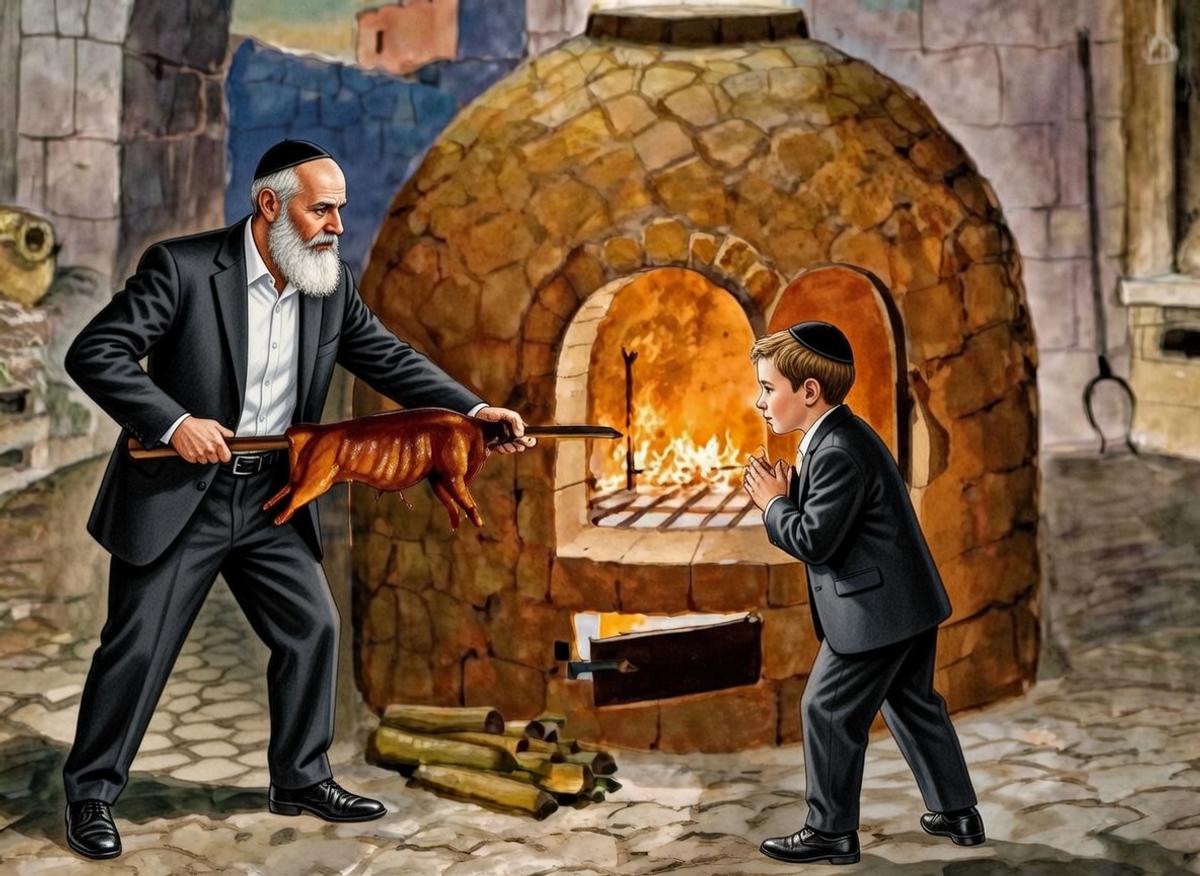
- The korban is roasted whole — over fire, with its head, legs, and innards. No water or liquid is used in the cooking. הקרבן נצלה שלם — על האש, עם ראשו, כרעיו וקרבו. אין להשתמש במים או נוזל בבישול.
- It is eaten with matzah and maror (bitter herbs) נאכל עם מצה ומרור
- Each member eats at least a kezayit (olive-sized portion) כל חבר אוכל לפחות כזית
- No bones may be broken. Leftover meat and bones must be burned before morning. אין לשבור עצמות. שאריות בשר ועצמות יש לשרוף לפני הבוקר.
- The meal is eaten within Jerusalem only — not beyond the city walls הסעודה נאכלת בתוך ירושלים בלבד — לא מחוץ לחומות העיר
- All meat must be consumed before dawn (alot hashachar) כל הבשר חייב להיאכל לפני עלות השחר
The Seder also includes telling the story of the Exodus, the four cups of wine, and songs of praise — celebrating the original redemption and the new one. הסדר כולל גם סיפור יציאת מצרים, ארבע כוסות יין ושירי הלל — חוגגים את הגאולה המקורית ואת הגאולה החדשה.
Pilgrimage Offerings קרבנות הרגל
In addition to the Korban Pesach, every pilgrim brings three offerings during the festival. These may be brought on any day of Chol HaMoed. בנוסף לקרבן הפסח, כל עולה לרגל מביא שלושה קרבנות במהלך החג. ניתן להביאם בכל יום מימי חול המועד.
Important this year: Unlike the Korban Pesach, the pilgrimage offerings do not override tumah (Rambam, Hilchot Chagigah 1). If you are tamei met and wish to bring these offerings, you must first purify through the red heifer process. Since the festival lasts 7 days, those who begin purification early enough may still bring these offerings during Chol HaMoed. חשוב השנה: בניגוד לקרבן הפסח, קרבנות הרגל אינם דוחים את הטומאה (רמב״ם, הלכות חגיגה א). אם אתם טמאי מת ורוצים להביא קרבנות אלו, עליכם להיטהר תחילה בתהליך פרה אדומה. מאחר שהחג נמשך 7 ימים, מי שמתחיל טהרה מוקדם מספיק עדיין יכול להביא קרבנות אלו בחול המועד.
- Olat Re'iyah (appearance offering) — you buy an animal (cattle, sheep, or goat) and bring it to the Temple when you first arrive. It is entirely burned on the altar — you don't eat any of it. This is your "entrance gift" to God. Men only. עולת ראייה (קרבן ההיראות) — קונים בהמה (בקר, צאן או עז) ומביאים אותה למקדש בהגעה הראשונה. היא נשרפת כולה על המזבח — לא אוכלים ממנה. זו ה״מתנת כניסה״ לה׳. גברים בלבד.
- Shalmei Chagigah (festival offering) — you buy an animal (cattle, sheep, or goat), sacrifice it at the Temple, and the meat is yours to eat as a festive family meal. Parts are burned on the altar, the rest is eaten by you and your family that day and the next. Men only. שלמי חגיגה (קרבן החג) — קונים בהמה (בקר, צאן או עז), מקריבים אותה במקדש, והבשר שלכם לאכילה כסעודת חג משפחתית. חלקים מוקטרים על המזבח, השאר נאכל על ידכם ומשפחתכם באותו יום וביום שלאחריו. גברים בלבד.
- Shalmei Simchah (rejoicing offering) — same idea as above: you buy an animal, sacrifice it, and eat the meat — but this one is specifically for celebration and sharing. You invite the Levites, converts, orphans, and widows to eat with you. Required of both men and women. שלמי שמחה (קרבן השמחה) — אותו רעיון כמו למעלה: קונים בהמה, מקריבים אותה ואוכלים את הבשר — אבל קרבן זה מיועד במיוחד לחגיגה ולשיתוף. מזמינים את הלויים, הגרים, היתומים והאלמנות לאכול אתכם. חובה על גברים ונשים.
In a regular year, there is also an optional offering called Chagigat 14 — an additional animal brought on 14 Nisan, eaten at the Seder before the Korban Pesach so everyone fills up first. This year, the chagigat 14 is not brought, since it is not offered when the pesach comes b'tumah (Rambam, Hilchot Korban Pesach 10:13). בשנה רגילה, יש גם קרבן רשות שנקרא חגיגת י״ד — בהמה נוספת שמביאים בי״ד ניסן, נאכלת בסדר לפני קרבן הפסח כדי שכולם ישבעו. השנה, חגיגת י״ד אינה קרבה, מאחר שאינה מוקרבת כאשר הפסח בא בטומאה (רמב״ם, הלכות קרבן פסח י:יג).
Chametz During the Festival חמץ בימי החג
From midday on 14 Nisan through the end of 21 Nisan, chametz (leavened bread) is forbidden: מחצות היום של י״ד ניסן ועד סוף כ״א ניסן, חמץ אסור:
- Night of 14 Nisan: Search for chametz (bedikat chametz) by candlelight ליל י״ד ניסן: בדיקת חמץ לאור הנר
- Morning of 14 Nisan: Burn remaining chametz (biur chametz) before the end of the fifth hour בוקר י״ד ניסן: שריפת חמץ (ביעור חמץ) לפני סוף השעה החמישית
- Chametz may not be owned, eaten, or seen in your possession for the entire festival אין לאכול, להחזיק או להיראות חמץ ברשותכם במהלך כל החג
If you are traveling to Jerusalem for the pilgrimage, plan to remove chametz from your home before departure or appoint an agent to do so. אם אתם נוסעים לירושלים לעלייה לרגל, תכננו לבער חמץ מביתכם לפני היציאה או מנו שליח לכך.
Practical Information מידע מעשי
Accommodation לינה
Jerusalemites traditionally host pilgrims at no charge. Accommodations are also available across the city and surrounding areas. תושבי ירושלים מארחים עולי רגל ללא תשלום כמנהג. לינה זמינה גם ברחבי העיר והסביבה.
Ma'aser Sheni מעשר שני
The 10% of produce you've been setting aside all year as "second tithe" — this money is specifically meant to be spent on food and drink in Jerusalem during the festivals. Bring it and use it for your holiday meals. ה-10% מהתוצרת שהפרשתם כל השנה כ״מעשר שני״ — כסף זה מיועד במיוחד להוצאות אוכל ושתייה בירושלים ברגלים. הביאו אותו והשתמשו בו לסעודות החג.
Roasting Locations מקומות צלייה
Designated roasting areas are available throughout Jerusalem. The korban must remain within the city walls at all times. אזורי צלייה ייעודיים זמינים ברחבי ירושלים. הקרבן חייב להישאר בתוך חומות העיר בכל עת.
Who Is Obligated מי חייב
- Korban Pesach: Every Jewish man and woman. This is one of the most important obligations in the Torah. קרבן פסח: כל גבר ואישה יהודים. זו אחת החובות החשובות ביותר בתורה.
- Pilgrimage (aliyah laregel): All men. Women are exempt but welcome and encouraged to participate. עלייה לרגל: כל הגברים. נשים פטורות אך מוזמנות ומעודדות להשתתף.
- Pesach Sheni: If you were on a distant journey and could not bring the Korban Pesach on 14 Nisan, you have a second chance on 14 Iyyar. This year: Since the pesach was brought b'tumah by the entire congregation, those who participated do not need Pesach Sheni — they have already fulfilled their obligation. Pesach Sheni applies only to those who missed the first pesach entirely (e.g. due to distance). פסח שני: אם הייתם בדרך רחוקה ולא יכולתם להקריב קרבן פסח בי״ד ניסן, יש הזדמנות שנייה בי״ד אייר. השנה: מאחר שהפסח הוקרב בטומאה על ידי כל הציבור, מי שהשתתף אינו צריך פסח שני — כבר קיים את חובתו. פסח שני חל רק על מי שלא הקריב כלל בפסח ראשון (למשל בגלל מרחק).
Get Started התחילו
This year, the Parah Adumah process is not required for the Korban Pesach. Start by registering your chabura and ordering a seh. If you also want to bring pilgrimage offerings, begin the red heifer purification by 7 Nisan (March 25). Those with other forms of tumah (zav, niddah, etc.) must still complete their respective purifications before participating. השנה, תהליך הפרה האדומה אינו נדרש לקרבן הפסח. התחילו ברישום חבורה והזמנת שה. אם ברצונכם גם להביא קרבנות רגל, התחילו את תהליך הפרה האדומה עד ז׳ ניסן (25 במרץ). מי שיש לו סוגי טומאה אחרים (זב, נידה וכו׳) עדיין חייב להשלים את טהרתו לפני ההשתתפות.
Overview סקירה כללית
The Pesach experience at the Temple has several components: the pilgrimage itself (aliyah laregel), the Korban Pesach sacrifice and Seder meal, the pilgrimage offerings, and the seven-day festival of Matzot. Each has its own requirements and timing. חוויית הפסח בבית המקדש כוללת מספר מרכיבים: העלייה לרגל עצמה, קרבן הפסח וליל הסדר, קרבנות הרגל, ושבעת ימי חג המצות. לכל אחד דרישות ולוח זמנים משלו.
Korban Pesach קרבן פסח
A lamb or young goat, purchased by your group, sacrificed at the Temple on 14 Nisan and eaten together that night at the Seder. This is the central mitzvah of the festival. כבש או גדי, שנרכש על ידי הקבוצה שלכם, מוקרב בבית המקדש בי״ד ניסן ונאכל יחד באותו הלילה בסדר. זו המצווה המרכזית של החג.
Pilgrimage Offerings קרבנות הרגל
Three animals you bring to the Temple during the festival: one fully burned on the altar, one eaten as a festive family meal, and one shared with the poor and the Levites. שלוש בהמות שמביאים למקדש במהלך החג: אחת נשרפת כולה על המזבח, אחת נאכלת כסעודת חג משפחתית, ואחת משותפת עם העניים והלויים.
Seven Days of Matzot שבעת ימי מצות
15–21 Nisan. Eat matzah, remove chametz, celebrate in Jerusalem. ט״ו–כ״א ניסן. אכילת מצה, ביעור חמץ, חגיגה בירושלים.
Key Dates — Nisan 5786 תאריכים חשובים — ניסן תשפ״ו
When to Arrive in Jerusalem מתי להגיע לירושלים
Your arrival date depends on whether you still need purification. Plan your trip around the earliest requirement that applies to you: מועד ההגעה תלוי בשאלה האם אתם עדיין צריכים טהרה. תכננו את הנסיעה לפי הדרישה המוקדמת ביותר שחלה עליכם:
Need Purification צריכים טהרה
Arrive by 7 Nisan (March 25). The red heifer process takes 7 days — this is the last possible start date. Purification is available at the Mount of Olives and regional stations outside Jerusalem. הגיעו עד ז׳ ניסן (25 במרץ). תהליך הפרה האדומה נמשך 7 ימים — זהו מועד ההתחלה האחרון האפשרי. טהרה זמינה בהר הזיתים ובתחנות אזוריות מחוץ לירושלים.
Already Pure כבר טהורים
Arrive by 14 Nisan (April 1) in time for the afternoon sacrifice. הגיעו עד י״ד ניסן (1 באפריל) בזמן לשחיטת אחר הצהריים.
How Long to Stay כמה זמן להישאר
The festival runs 15–21 Nisan (7 days). You are free to leave after the last Yom Tov (night of 21 Nisan). Most pilgrims stay the full festival. החג נמשך ט״ו–כ״א ניסן (7 ימים). ניתן לצאת לאחר יום טוב האחרון (ליל כ״א ניסן). רוב עולי הרגל נשארים לכל החג.
Total Trip סה״כ נסיעה
Up to 15 days if you need purification (7 Nisan – 21 Nisan). Up to 12 days if arriving for seh selection. 8 days minimum (14–21 Nisan). עד 15 ימים אם צריכים טהרה (ז׳–כ״א ניסן). עד 12 ימים אם מגיעים להפרשת השה. 8 ימים לפחות (י״ד–כ״א ניסן).
If you begin purification at a regional station near your home, you can arrive in Jerusalem later — as long as you complete the process and immerse in a mikvah before 14 Nisan. אם אתם מתחילים טהרה בתחנה אזורית ליד ביתכם, ניתן להגיע לירושלים מאוחר יותר — כל עוד משלימים את התהליך וטובלים במקווה לפני י״ד ניסן.
Budget & What to Prepare תקציב ומה להכין
Here is a breakdown of the costs and items you need. Prices are estimated in US dollars. להלן פירוט העלויות והפריטים הנדרשים. המחירים מוערכים בשקלים (שקל הקודש).
Required Purchases רכישות חובה
Other Expenses to Plan For הוצאות נוספות לתכנון
- Travel to and from Jerusalem — depends on distance. Pilgrimage routes have free water stations and rest areas. נסיעה לירושלים וחזרה — תלוי במרחק. לאורך מסלולי העלייה לרגל יש תחנות מים ומנוחה חינם.
- Matzah, maror, wine — matzah for the Seder and throughout the festival, bitter herbs, and four cups of wine per person. Standard grocery expenses. מצה, מרור, יין — מצה לסדר ולכל החג, מרור וארבע כוסות יין לכל אדם. הוצאות מכולת רגילות.
- Food for the festival — 7 days of meals in Jerusalem. If you farm or buy produce, you've been setting aside 10% as ma'aser sheni (second tithe) all year — this money is specifically designated to be spent on food and drink in Jerusalem during the festivals. This is what it's for. אוכל לחג — 7 ימי ארוחות בירושלים. אם אתם מגדלים או קונים תוצרת חקלאית, הפרשתם 10% כמעשר שני כל השנה — כסף זה מיועד במיוחד להוצאות אוכל ושתייה בירושלים בימי הרגל. זה בדיוק מה שהוא נועד לכסות.
- Accommodation — Jerusalemites traditionally host pilgrims free of charge. You will not pay for lodging in most cases. לינה — תושבי ירושלים מארחים עולי רגל ללא תשלום כמנהג. ברוב המקרים לא תשלמו על לינה.
The Torah guarantees that no one will covet your land while you are away on pilgrimage (Exodus 34:24). Leave with confidence. התורה מבטיחה שאיש לא יחמוד את ארצכם בעוד אתם בעלייה לרגל (שמות ל״ד:כ״ד). צאו בביטחון.
Your Checklist רשימת המטלות שלכם
Every Individual כל אדם
- Complete purification (red heifer process) — begin by 7 Nisan at the latest השלמת טהרה (תהליך פרה אדומה) — התחילו עד ז׳ ניסן לכל המאוחר
- Register in a chabura — before 14 Nisan הירשמו לחבורה — לפני י״ד ניסן
- Be present at the Temple courtyard on 14 Nisan afternoon for the slaughter היו נוכחים בעזרת המקדש אחר הצהריים של י״ד ניסן לשחיטה
- Eat the Korban Pesach with matzah and maror on Seder night אכלו את קרבן הפסח עם מצה ומרור בליל הסדר
- Remove all chametz from your possession before midday on 14 Nisan בערו כל חמץ מרשותכם לפני חצות י״ד ניסן
- Buy and bring an animal for your Shalmei Simchah (rejoicing offering) — you'll sacrifice it at the Temple and eat the meat as a celebratory meal with family and guests קנו והביאו בהמה לשלמי שמחה — תקריבו אותה במקדש ותאכלו את הבשר כסעודת חגיגה עם משפחה ואורחים
Head of Household / Chabura Organizer ראש משפחה / מארגן חבורה
- Register the chabura — list all members (men, women, children who can eat) רשמו את החבורה — רשימת כל החברים (גברים, נשים, ילדים שיכולים לאכול)
- Order or acquire a seh — lamb or kid goat, male, under one year, blemish-free הזמינו או רכשו שה — כבש או גדי, זכר, בן שנתו, ללא מומים
- Set aside the seh on 10 Nisan and ensure it is guarded and inspected הפרישו את השה בי׳ ניסן וודאו שהוא נשמר ונבדק
- Ensure all members have completed purification before 14 Nisan ודאו שכל החברים השלימו טהרה לפני י״ד ניסן
- Arrange a roasting location and Seder venue within Jerusalem סדרו מקום צלייה ומקום לסדר בתוך ירושלים
- Prepare matzah, maror, wine, and food for the household for the full 7-day festival הכינו מצה, מרור, יין ואוכל למשפחה לכל 7 ימי החג
Bedikat Chametz Before Departure: If you were home at any point during the 30 days before Pesach, you are obligated to search your home for chametz before leaving for Jerusalem. You have two options: בדיקת חמץ לפני היציאה: אם הייתם בביתכם בכל שלב במהלך 30 הימים שלפני פסח, אתם מחויבים לבדוק את הבית מחמץ לפני היציאה לירושלים. יש שתי אפשרויות:
- Option A: Search for chametz at home before you leave, or appoint an agent to do the bedikah on the night of the 14th אפשרות א׳: בדקו חמץ בבית לפני היציאה, או מנו שליח שיבדוק בליל י״ד
- Option B: Leave on 14 Nisan morning — after performing bedikat chametz at home the night before (night of the 13th). Burn remaining chametz that morning before departure. אפשרות ב׳: צאו בבוקר י״ד ניסן — לאחר שביצעתם בדיקת חמץ בבית בלילה שלפני (ליל י״ג). שרפו חמץ שנותר באותו בוקר לפני היציאה.
Men Only — Additional Obligations גברים בלבד — חובות נוספות
- Appear at the Temple (re'iyat panim) — the pilgrimage obligation itself היראו בבית המקדש (ראיית פנים) — חובת העלייה לרגל עצמה
- Buy and bring an animal for the Olat Re'iyah — fully burned on the altar as your appearance gift to God קנו והביאו בהמה לעולת ראייה — נשרפת כולה על המזבח כמתנת היראות שלכם לה׳
- Buy and bring an animal for the Shalmei Chagigah — sacrificed at the Temple, and the meat is your festive family meal קנו והביאו בהמה לשלמי חגיגה — מוקרבת במקדש, והבשר הוא סעודת החג המשפחתית שלכם
Step 1 — Purification שלב 1 — טהרה
Ritual purity is required to enter the Temple and to eat the Korban Pesach. Most people today will need the 7-day red heifer purification process: טהרה נדרשת לכניסה למקדש ולאכילת קרבן הפסח. רוב האנשים כיום יצטרכו את תהליך הטהרה של 7 ימים עם אפר פרה אדומה:
- Day 1: Begin purification — sprinkled with the ashes of the red heifer mixed with spring water יום 1: התחלת טהרה — הזאה באפר פרה אדומה מעורב במים חיים
- Day 3: Second sprinkling יום 3: הזאה שנייה
- Day 7: Final sprinkling, followed by immersion in a mikvah. Purity takes effect at sunset. יום 7: הזאה אחרונה, ולאחריה טבילה במקווה. הטהרה חלה בשקיעה.
Purification appointments are available at the Mount of Olives and regional stations. Learn more about the purification process → ניתן לקבוע תורים לטהרה בהר הזיתים ובתחנות אזוריות. מידע נוסף על תהליך הטהרה ←
Step 2 — Form a Chabura שלב 2 — הקמת חבורה
The Korban Pesach is eaten in groups called chaburot. Every person — man, woman, or child who can eat — must be registered in a chabura before the sacrifice. Registration is permanently locked at the time of slaughter. קרבן הפסח נאכל בקבוצות הנקראות חבורות. כל אדם — גבר, אישה או ילד שיכול לאכול — חייב להיות רשום בחבורה לפני השחיטה. הרישום ננעל לצמיתות בזמן השחיטה.
- A chabura can be a family, a group of friends, or a community חבורה יכולה להיות משפחה, קבוצת חברים, או קהילה
- Every member must be able to eat at least a kezayit (olive-sized portion) of the korban כל חבר חייב להיות מסוגל לאכול לפחות כזית מהקרבן
- One seh (lamb or goat) is designated per chabura — ensure your group size matches שה אחד (כבש או גדי) מיועד לכל חבורה — ודאו שגודל הקבוצה מתאים
- All members must be ritually pure by the time of slaughter on 14 Nisan כל החברים חייבים להיות טהורים עד זמן השחיטה בי״ד ניסן
Step 3 — The Seh (Lamb or Goat) שלב 3 — השה (כבש או גדי)
Each chabura brings one seh — either a lamb (keves) or a kid goat (ez). The animal must meet the following requirements: כל חבורה מביאה שה אחד — כבש או גדי עזים. הבהמה חייבת לעמוד בדרישות הבאות:
- Male, under one year old זכר, בן שנתו
- Free of blemishes — inspected from 10 Nisan onward ללא מומים — נבדק מי׳ ניסן ואילך
- Set aside on 10 Nisan and guarded until slaughter מופרש בי׳ ניסן ונשמר עד השחיטה
You may order a pre-inspected seh through the Temple ordering system, or bring your own for priestly inspection. ניתן להזמין שה שנבדק מראש דרך מערכת ההזמנות של המקדש, או להביא משלכם לבדיקת הכהנים.
The Sacrifice — 14 Nisan Afternoon השחיטה — אחר הצהריים של י״ד ניסן
The Korban Pesach is slaughtered in the Temple courtyard on the afternoon of 14 Nisan, after the Temple's daily afternoon service. Here's what happens: קרבן הפסח נשחט בעזרת המקדש אחר הצהריים של י״ד ניסן, לאחר עבודת התמיד של בין הערביים. כך מתנהל התהליך:
- The Israelites enter the courtyard in three groups (kitot). The Temple gates close after each group fills the courtyard. הישראלים נכנסים לעזרה בשלוש כיתות. שערי המקדש ננעלים לאחר שכל כיתה ממלאת את העזרה.
- Each person slaughters his own lamb or goat. The Kohanim (priests) catch the blood in basins and pass them in a chain to the altar. כל אדם שוחט את הכבש או הגדי שלו בעצמו. הכהנים מקבלים את הדם במזרקות ומעבירים אותם בשרשרת למזבח.
- The Levites sing Hallel (psalms of praise) throughout. If a group finishes before Hallel ends, it is repeated. הלויים שרים הלל לאורך כל הזמן. אם כיתה מסיימת לפני סוף ההלל, חוזרים עליו.
- The internal fats and kidneys are burned on the altar (these are the parts given to God). You then take the rest of the animal home to roast for the Seder. החלבים הפנימיים והכליות מוקטרים על המזבח (אלו החלקים שניתנים לה׳). לאחר מכן לוקחים את שאר הבהמה לצלייה לסדר.
Seder Night — 15 Nisan ליל הסדר — ט״ו ניסן
After nightfall on 14 Nisan (the beginning of 15 Nisan), the chabura gathers within Jerusalem to eat the Korban Pesach: לאחר צאת הכוכבים של י״ד ניסן (תחילת ט״ו ניסן), החבורה מתכנסת בתוך ירושלים לאכילת קרבן הפסח:
- The korban is roasted whole — over fire, with its head, legs, and innards. No water or liquid is used in the cooking. הקרבן נצלה שלם — על האש, עם ראשו, כרעיו וקרבו. אין להשתמש במים או נוזל בבישול.
- It is eaten with matzah and maror (bitter herbs) נאכל עם מצה ומרור
- Each member eats at least a kezayit (olive-sized portion) כל חבר אוכל לפחות כזית
- No bones may be broken. Leftover meat and bones must be burned before morning. אין לשבור עצמות. שאריות בשר ועצמות יש לשרוף לפני הבוקר.
- The meal is eaten within Jerusalem only — not beyond the city walls הסעודה נאכלת בתוך ירושלים בלבד — לא מחוץ לחומות העיר
- All meat must be consumed before dawn (alot hashachar) כל הבשר חייב להיאכל לפני עלות השחר
The Seder also includes telling the story of the Exodus, the four cups of wine, and songs of praise — celebrating the original redemption and the new one. הסדר כולל גם סיפור יציאת מצרים, ארבע כוסות יין ושירי הלל — חוגגים את הגאולה המקורית ואת הגאולה החדשה.
Pilgrimage Offerings קרבנות הרגל
In addition to the Korban Pesach, every pilgrim brings three offerings during the festival. These may be brought on any day of Chol HaMoed: בנוסף לקרבן הפסח, כל עולה לרגל מביא שלושה קרבנות במהלך החג. ניתן להביאם בכל יום מימי חול המועד:
- Olat Re'iyah (appearance offering) — you buy an animal (cattle, sheep, or goat) and bring it to the Temple when you first arrive. It is entirely burned on the altar — you don't eat any of it. This is your "entrance gift" to God. Men only. עולת ראייה (קרבן ההיראות) — קונים בהמה (בקר, צאן או עז) ומביאים אותה למקדש בהגעה הראשונה. היא נשרפת כולה על המזבח — לא אוכלים ממנה. זו ה״מתנת כניסה״ לה׳. גברים בלבד.
- Shalmei Chagigah (festival offering) — you buy an animal (cattle, sheep, or goat), sacrifice it at the Temple, and the meat is yours to eat as a festive family meal. Parts are burned on the altar, the rest is eaten by you and your family that day and the next. Men only. שלמי חגיגה (קרבן החג) — קונים בהמה (בקר, צאן או עז), מקריבים אותה במקדש, והבשר שלכם לאכילה כסעודת חג משפחתית. חלקים מוקטרים על המזבח, השאר נאכל על ידכם ומשפחתכם באותו יום וביום שלאחריו. גברים בלבד.
- Shalmei Simchah (rejoicing offering) — same idea as above: you buy an animal, sacrifice it, and eat the meat — but this one is specifically for celebration and sharing. You invite the Levites, converts, orphans, and widows to eat with you. Required of both men and women. שלמי שמחה (קרבן השמחה) — אותו רעיון כמו למעלה: קונים בהמה, מקריבים אותה ואוכלים את הבשר — אבל קרבן זה מיועד במיוחד לחגיגה ולשיתוף. מזמינים את הלויים, הגרים, היתומים והאלמנות לאכול אתכם. חובה על גברים ונשים.
There's also an optional extra offering called Chagigat 14 — an additional animal you can bring on 14 Nisan. Its meat is eaten at the Seder before the Korban Pesach, so everyone fills up first and only needs a small required portion of the lamb/goat. Useful for large groups. יש גם קרבן רשות נוסף שנקרא חגיגת י״ד — בהמה נוספת שניתן להביא בי״ד ניסן. הבשר שלה נאכל בסדר לפני קרבן הפסח, כדי שכולם ישבעו קודם ויצטרכו רק כזית מהכבש/גדי. שימושי לקבוצות גדולות.
Chametz During the Festival חמץ בימי החג
From midday on 14 Nisan through the end of 21 Nisan, chametz (leavened bread) is forbidden: מחצות היום של י״ד ניסן ועד סוף כ״א ניסן, חמץ אסור:
- Night of 14 Nisan: Search for chametz (bedikat chametz) by candlelight ליל י״ד ניסן: בדיקת חמץ לאור הנר
- Morning of 14 Nisan: Burn remaining chametz (biur chametz) before the end of the fifth hour בוקר י״ד ניסן: שריפת חמץ (ביעור חמץ) לפני סוף השעה החמישית
- Chametz may not be owned, eaten, or seen in your possession for the entire festival אין לאכול, להחזיק או להיראות חמץ ברשותכם במהלך כל החג
If you are traveling to Jerusalem for the pilgrimage, plan to remove chametz from your home before departure or appoint an agent to do so. אם אתם נוסעים לירושלים לעלייה לרגל, תכננו לבער חמץ מביתכם לפני היציאה או מנו שליח לכך.
Practical Information מידע מעשי
Accommodation לינה
Jerusalemites traditionally host pilgrims at no charge. Accommodations are also available across the city and surrounding areas. תושבי ירושלים מארחים עולי רגל ללא תשלום כמנהג. לינה זמינה גם ברחבי העיר והסביבה.
Ma'aser Sheni מעשר שני
The 10% of produce you've been setting aside all year as "second tithe" — this money is specifically meant to be spent on food and drink in Jerusalem during the festivals. Bring it and use it for your holiday meals. ה-10% מהתוצרת שהפרשתם כל השנה כ״מעשר שני״ — כסף זה מיועד במיוחד להוצאות אוכל ושתייה בירושלים ברגלים. הביאו אותו והשתמשו בו לסעודות החג.
Roasting Locations מקומות צלייה
Designated roasting areas are available throughout Jerusalem. The korban must remain within the city walls at all times. אזורי צלייה ייעודיים זמינים ברחבי ירושלים. הקרבן חייב להישאר בתוך חומות העיר בכל עת.
Who Is Obligated מי חייב
- Korban Pesach: Every Jewish man and woman. This is one of the most important obligations in the Torah. קרבן פסח: כל גבר ואישה יהודים. זו אחת החובות החשובות ביותר בתורה.
- Pilgrimage (aliyah laregel): All men. Women are exempt but welcome and encouraged to participate. עלייה לרגל: כל הגברים. נשים פטורות אך מוזמנות ומעודדות להשתתף.
- Pesach Sheni: If you were impure or on a distant journey and could not bring the Korban Pesach on 14 Nisan, you have a second chance on 14 Iyyar. פסח שני: אם הייתם טמאים או בדרך רחוקה ולא יכולתם להקריב קרבן פסח בי״ד ניסן, יש הזדמנות שנייה בי״ד אייר.
Get Started התחילו
Start with purification — the 7-day process is the longest lead-time requirement. The last day to begin is 7 Nisan (March 25). התחילו עם טהרה — תהליך 7 הימים הוא הדרישה עם זמן ההכנה הארוך ביותר. היום האחרון להתחלה הוא ז׳ ניסן (25 במרץ).